Maximize Your Game’s Potential with German Game Localization

Last updated May 6, 2026

Rishi Anand
German game localization

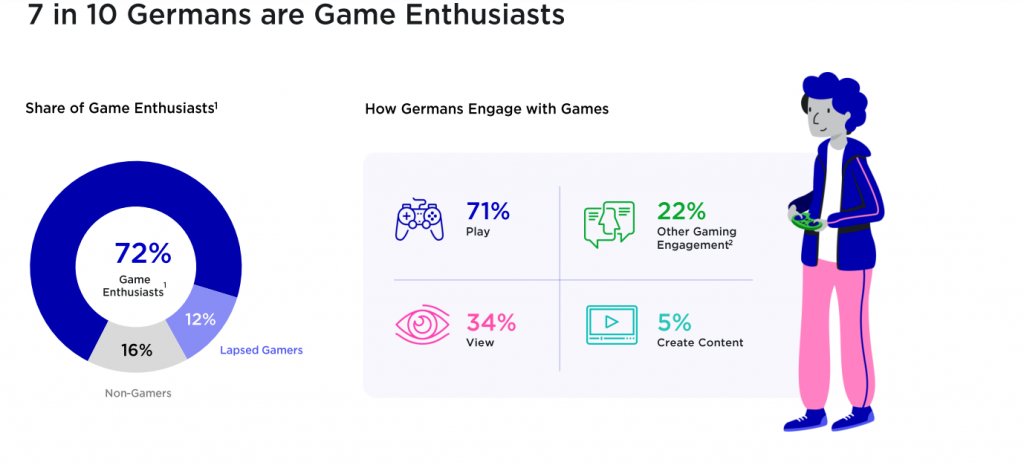
Home to 49 million active gamers, Germany is the largest and most attractive gaming market in Europe, and the fifth-largest globally. In fact, it has a greater number of active video game players than any other country in Europe. Every 7 in 10 Germans are game enthusiasts! With such a vast and engaged gaming audience, tapping into the ever-growing German gaming market is extremely important for developers as it can significantly boost their game’s success and revenue. However, to truly capitalize on this opportunity, effective game localization is crucial.
Here are some examples that highlight the potential of the German gaming market: Germany has 45 million active gamers who spend an average of $113 each on games and in-game purchases, nearly double the global average of $59. The German gaming market generates approximately $5 billion in game sales and in-game purchases yearly, and in 2023, the market grew by 6%, generating almost $11 billion in revenue. Mobile in-game purchases account for 60% of all in-game purchase revenue in Germany, totaling nearly $3.12 billion. The average German gamer is 38.2 years old, and the market is almost evenly split between male and female gamers, with females making up 52% of the player base. Germany has a strong gaming culture, with 87.5 million German-speaking gamers worldwide, including 58 million native speakers. German game localization opens doors to this global audience.

Effective localization not only increases a game’s success and revenue but also extends the life of your game by building long-term engagement and loyalty among German gamers.

Infographic showing that 7 in 10 Germans are game enthusiasts, highlighting the importance of German game localization with data on playing, viewing, and content creation habits. 

Source: Newzoo

What is Game Localization?

Game localization is the process of adapting video games for different regions, languages, and cultures of the world. It involves translating in-game text, dialogues, user interfaces, and instructions into the target language while adapting to the cultural nuances, preferences, and legal requirements of the target market.

Compared to other languages, German game localization presents unique challenges due to the complexity of German grammar, such as articles and adjective endings that vary based on case, gender, and number. This complexity, including aspects like genders and cases, can affect localization accuracy and requires careful attention to detail. Additionally, game localization services involve modifying graphics, audio, and other elements to suit the preferences and regulations of specific regions or countries. All this and more with an aim to make the gaming experience more immersive, relatable, and enjoyable for regional players.

Why Should You Localize Your Game for the German Industry?

While Germans are proficient in English, they are very passionate about their language and prefer to consume content in German. Localizing your game in the native language of your players can bring a world of difference to your business. By translating the in-game dialogue and text and adapting gameplay mechanics and cultural references, you can give your players a more immersive gaming experience. A localized game will feel natural to the players and will help them effortlessly immerse themselves in the storyline, dialogues, instructions, and text, thus enhancing their overall engagement and satisfaction.

Moreover, game localization enables cultural enrichment of the gaming landscape. It allows players to engage with narratives and themes that reflect their own experiences and identities. By tailoring the images, animations, icons, and content to suit the preferences of German gamers, developers can forge stronger connections with their audience and foster a sense of belonging within the gaming community.

For example, while a dragon is believed to bring good fortune in Chinese culture, they are considered wicked and dangerous in the Western world. Mobile and video game localization services help developers sidestep such unintended misunderstandings or cultural awkwardness.

German game localization is more than linguistic accommodation; it is a strategic move that enhances players’ engagement and satisfaction and will amplify the overall success of your game in the German market.

Points to Keep in Mind When Localizing Games for German Players

So, what are the best practices for game localization? Let’s take a look. Careful planning and quality control are essential before the game’s release, especially for German localization, which often requires managing separate asset pipelines and thorough QA testing to ensure compliance.

1. Language accuracy

When localizing your game, it is extremely important to translate all in-game text, dialogue, menus, and instructions accurately into the appropriate German dialect, considering the diversity within the German-speaking regions and even beyond. It is important to incorporate the appropriate dialect to add authenticity and depth to the character’s dialogue.

For example, German grammar complexity—including aspects like genders and cases—can significantly affect localization accuracy. Examples include how the gender of nouns (der, die, das) and the use of four grammatical cases (nominative, accusative, dative, genitive) can change the meaning of sentences or require different word endings, which must be handled carefully to avoid translation errors.

Working with a Germany-based professional game localization agency is your best option. They can help maintain linguistic nuances, idioms, and colloquialisms to ensure authenticity and immersion.

How to Choose a Genuine Game Localization Company
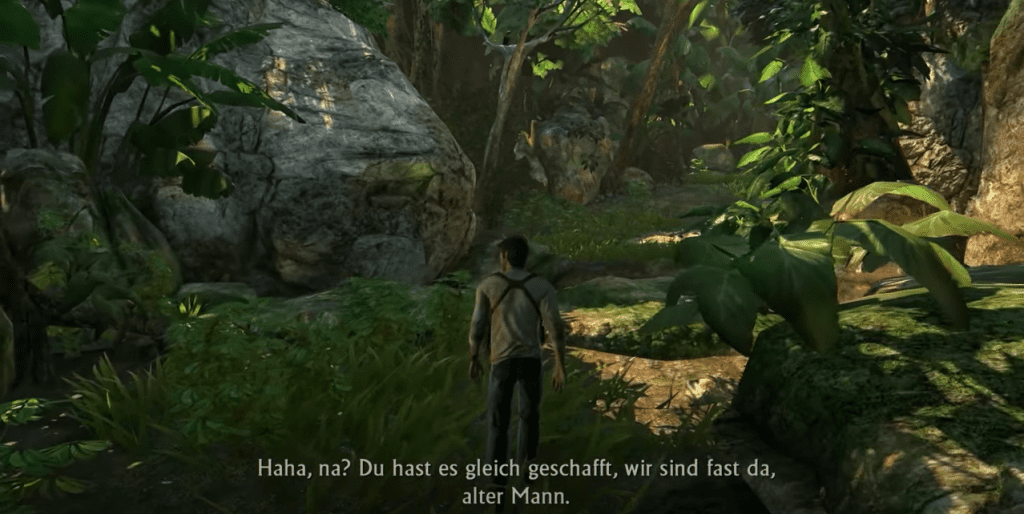
In-game screenshot of an adventure game set in a jungle with German subtitles, demonstrating professional German game localization and dialogue adaptation. 

Screenshot of Uncharted gameplay in German (Source: Uncharted)

2. User interface (UI)

It is important to optimize UI elements, controls, fonts, and layout for German users. It enhances usability and accessibility. For example, when localizing your game, it is essential to take into account the length of German words, which are often longer than their English counterparts. To accommodate German language text, you must either allocate extra space in your UI design or consider using abbreviations during game localization.

3. User experience (UX)

Consideration should also be given to UX aspects such as color schemes, graphics, and navigation preferences. For instance, understanding the German keyboard layout is crucial for game developers and localization teams to ensure the best gaming experience. The presence of umlauts and special characters like Ä, Ö, Ü, and the Eszett (ß) impacts not only text input but also gameplay controls. The Ctrl key, commonly used in English keyboards, is labeled as Strg (short for Steuerungstaste) on German keyboards.

When creating tutorials, control mechanisms, or any interactive elements in your game, ensure that they align with the German keyboard layout. Provide clear instructions or tooltips that reference the Strg key instead of Ctrl to avoid confusion among German-speaking players. This attention to detail enhances the overall user experience and prevents usability issues during gameplay.

4. Cultural adaptation

Reflecting German cultural references, humor, holidays, and traditions within the game enhances player engagement. Avoiding cultural taboos and sensitivities is equally crucial. Anything that has to do with World War II or Hitler is considered inappropriate and must be avoided at all levels. Similarly, the use of Nazi symbols and swastikas is viewed as illegal in Germany and must be removed or replaced to avoid any trouble or potential backlash.

5. Legal compliance

Adhering to German legal standards concerning age ratings, content restrictions, privacy laws (such as GDPR), and local regulations is mandatory. Failing to comply can lead to legal repercussions and hinder market acceptance.

Special characters and formatting in german localization

When localizing a game for the German market, attention to special characters and formatting is essential to deliver a seamless and authentic gaming experience for German speaking gamers. The German language features unique characters such as ä, ö, ü, and ß, which must be accurately represented throughout the game’s user interface, dialogue, and story. Failing to include these special characters can break immersion and lead to confusion or misinterpretation of key information.

Beyond characters, formatting conventions also play a significant role. Date and time formats, currency symbols, and numbering systems in Germany differ from those in other regions. For example, Germans use the day-month-year format for dates and a comma as a decimal separator. Adapting these elements ensures that the German version of your game feels natural and intuitive to local players.

Game developers often face challenges in implementing these details, especially when working with different file types or platforms. This is where experienced translators and project managers become invaluable. They help navigate the complexities of German localization, ensuring that every aspect—from special characters to formatting—is handled with precision. By prioritizing these details, developers can avoid the pitfalls of mere translation and guarantee a high-quality, polished German version that resonates with the target market.


Quality assurance and testing for german game localization

Quality assurance and testing are critical steps in the games localization process, especially when targeting the discerning German market. To meet the high expectations of German gamers, every aspect of the localized game must be thoroughly tested for linguistic accuracy, cultural nuances, and technical performance. This includes reviewing all in-game text, dialogue, and user interface elements to ensure they are not only correct in German but also culturally appropriate.

A key part of this process is evaluating audio elements such as voice recording, lip sync, and sound design. Voice directors and voice talent must be carefully selected and their performances reviewed to ensure that the German audio matches the original version in both quality and emotional impact. Synchronization between voice and character animation is essential for maintaining immersion, and any discrepancies can quickly be noticed by passionate gamers.

Testing should also cover various platforms, including mobile devices, to guarantee that the game functions flawlessly for all German speaking players. By investing in comprehensive quality assurance, game developers can identify and resolve issues before release, ensuring that the localized version delivers an outstanding gaming experience. This commitment to quality not only enhances the game’s reputation but also helps secure its success in the competitive German market.


Post-launch support for localized games

The work doesn’t end with a game’s release in the German market—post-launch support is vital for maintaining player satisfaction and ensuring long-term success. After launching the German version, game developers should actively monitor player feedback, both in-game and across community channels, to quickly identify and address any technical issues or localization errors that may arise.

Ongoing updates and patches are often necessary to refine dialogue, adjust user interface elements, and respond to the evolving needs of the German gaming community. By demonstrating a commitment to continuous improvement, developers show that they value their German players and are dedicated to delivering the best possible experience.

Providing robust post-launch support can also lead to positive word-of-mouth and favorable online reviews, which are crucial for building a loyal player base in the German market. Ultimately, attentive post-launch support helps developers strengthen their reputation, foster community engagement, and lead their games to greater success in Germany and beyond.


Measuring the success of your german game localization

To truly maximize your game’s potential in the German market, it’s essential to measure the success of your localization efforts. Game developers should establish clear metrics, such as sales figures, revenue growth, and player engagement rates among German gamers. Monitoring retention rates and analyzing player feedback and reviews can provide valuable insights into how well the German version resonates with local players.

Advanced analytics tools allow developers to track the number of German speaking players, study their in-game behavior, and understand their preferences. This data-driven approach enables developers to identify strengths and areas for improvement, ensuring that future updates and localization projects are even more effective.

By regularly assessing these metrics, developers can refine their localization strategies, make informed decisions, and enhance the overall gaming experience for German speaking players. Measuring success is not just about numbers—it’s about understanding your audience and ensuring your game continues to thrive in the competitive German market.

Ready to Conquer the German Gaming Market?

Partner with us! As a leading game localization company, we, at Linguidoor, can help you fine-tune your games to resonate with German players. We are powered by a team of German translators and localization specialists who not only ensure linguistic accuracy but also adhere to the cultural nuances and preferences of the German gaming community. By leveraging our expertise, you can deliver a localized gaming experience for maximum engagement and retention. Trust us to unlock the full potential of your games and take your gaming business to new heights!

For more information or to discuss your German game localization needs, please contact us today.

Why is German game localization important for game developers?

German is one of the most widely spoken languages in Europe, with a strong gaming market. Localizing a game into German enhances user experience, improves engagement, and increases downloads and revenue in German-speaking countries like Germany, Austria, and Switzerland.

What are the key challenges in localizing a game into German?

Some challenges include handling complex German grammar, longer word lengths, cultural adaptation of game content, and ensuring accurate translations of slang and gaming jargon to maintain immersion.

How does Linguidoor ensure high-quality German game localization?

Linguidoor follows a structured localization process with expert native translators, cultural adaptation specialists, and quality assurance checks. They ensure that translations are not only linguistically accurate but also resonate with German-speaking gamers.

How does German localization impact game rankings in the app store?

Proper localization, including keyword optimization in German, helps games rank higher in German-language app stores. This improves visibility, organic downloads, and user retention.

Related Article:

The Process Of Localizing Games

How To Choose A Genuine Game Localization Company

Explore Our Services

Expand your audience reach with our comprehensive Translation
and Localization services

Trustpilot